
Widow’s Bay Episodes 6 and 7 Finally Reveal the Town’s Hidden Past

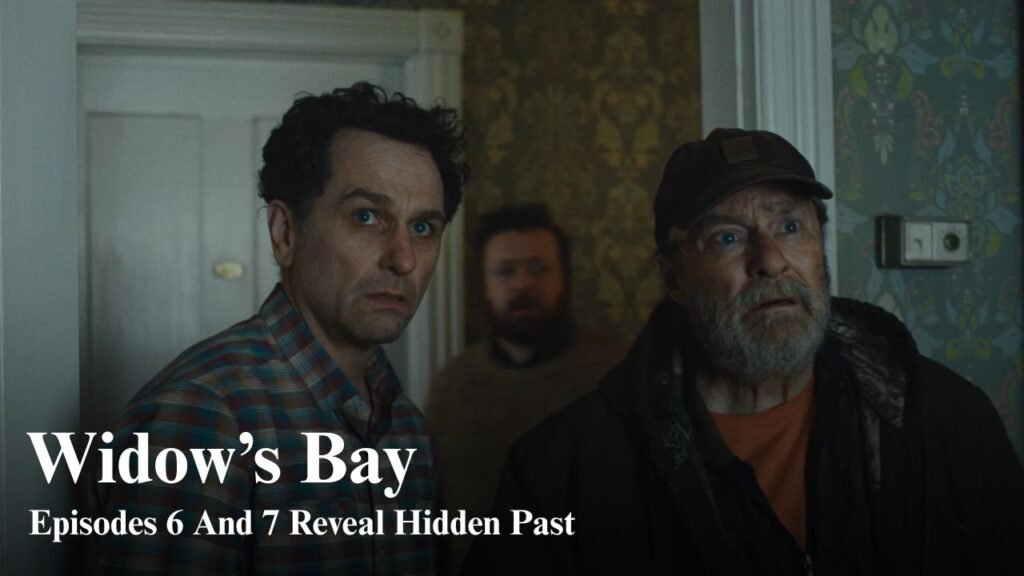
Widow’s Bay: These two episodes not only answer questions, but they change your perception of the previous scenes. Little details, odd silences, suspicious reactions suddenly assume a new importance. The past is not only a crime or a rumour and the mystery dives into darker, more emotional territory. It sounded like the defining thing of families, and friendships, and the eerie sense of dread that loomed over Widow’s Bay. Episodes 6 & 7 work because they allow themselves space to breathe and allow the truth to hang heavy, but keep you on the edge of your seat.

Widow’s Bay Episodes 6 And 7 Expose The Town’s Darkest Secret
The best thing about episodes 6 and 7 is that they make the town feel like a character in its own right. Now Widow’s Bay is more than a town of foggy streets and old houses and suspicious locals. It is a place constructed on silence. It’s like every corner has some connection to something they weren’t supposed to talk about. The revelation of the town’s secret past isn’t some loud shock twist thrown in for shock. Instead it feels deliberately planted. The clues were always there but these episodes give them meaning at last.
 Strict Theatre Guidelines Issued Before Vijay’s Final Film Jana Nayagan Opens in Tamil Nadu
The episode opens with the main characters’ rising tension. Conversations are shorter, it’s awkward to look each other in the eye and even normal scenes are tense. This feeling is exploited well by the show. Rather than going for a big reveal right away, it gives the viewers a sense of the fear still in the town. People aren’t hiding facts. They are hiding versions of themselves. It makes the story more gripping, because the danger is not only what happened years ago. It’s also about what people are prepared to do to keep that past buried.

Episode 7 makes the damage of the truth worse. It doesn’t allow the audience to enjoy the reveal as a simple answer. Or rather, what happens when secrets start to come out. Some characters look guilty, some look relieved, and some look more dangerous than ever. It is that emotional confusion which makes the story human. The town’s past is not a puzzle piece; it is a wound that never healed.
 India’s Got Latent Episode 3 Goes Viral as Vishal Dadlani and Raghu Ram Steal the Spotlight
Why The Hidden Past Turns All Our Roles Upside Down
Before those episodes, some characters in Widow’s Bay had seemed vaguely familiar. They had secrets, they dodged questions, they acted strangely when old events were mentioned. But episodes 6 & 7 make those reactions personal. That buried past is why some are so desperate to control the story. It also tells you why others have spent years running from the truth.
What’s most interesting is that the show doesn’t try to make everyone out to be all good or all bad. Some characters made wrong decisions out of fear. Others used the fear to gain power. Some had remained silent, knowing that to speak would have broken up their families. Writing like this gives the mystery more depth. That meant Widow’s Bay survived not because people ignored the past, but because they all agreed to look away from it.
- The reveal makes previous character behaviour feel more meaningful, rather than random.
- Now guilt and fear have destroyed old friendships.
- Family ties become more complicated as the truth begins to emerge.
- The town’s silence is systematic, not random.
- The mystery is suspenseful, not just emotional.
Episode 6 Sets Up The Tension Leading To Episode 7’s Emotional Stunner
Episode 6 is a slow tightening of the noose. It Gives enough information to make the viewers feel close to the truth, but not enough for them to relax. The pace is slow, the scenes placid on the surface but fraught with tension below. A quiet talk in Widow’s Bay can be more dangerous than a chase, for nobody quite says what they mean. “That style really works in this episode.
The episode also plays clever games with rumour and memory. It doesn’t give us the past in one neat flashback but allows different people to hold different versions of the same truth. The audience is left wondering which memory is to be believed. In a town where everyone has something to protect, honesty is just another lie. Episode 6 understands that suspense doesn’t always have to be about action. Sometimes it is waiting for someone to finally say the name, location, or event that everyone has skirted around.
The town’s secret makes the story more perilous.
By the time we hit episodes 6 and 7, Widow’s Bay doesn’t feel like a place where you can ask the right questions to solve a mystery. It’s like a place where if you ask questions you can get hurt. The hidden past is dangerous, because it means the town has already done its protecting once. If people will hide something for years, there is no reason to expect them to be honest now.
And this is where the series really takes off. The reveal doesn’t tie everything up too neatly but raises new questions. Who profited by the silence? Who got pushed in? Who knows more than they have let on? The questions keep the suspense going but offer more explicit directions for the next episodes. The mystery is no longer in finding out if something happened.
Why early clues look different to viewers now
A great mystery is one where a big reveal recontextualizes earlier episodes. Widow’s Bay, seen in episodes 6 and 7. Scenes that were once just setting the mood are now laden with meaning. Now the strange silence, the old photo, the tip-off from a local or the character refusing to answer a direct question all seem carefully inserted. The show is a reward for people who paid attention.
