
Swiggy Domestic Ownership Crosses 50 Percent Ahead of Its Next Major Market Move

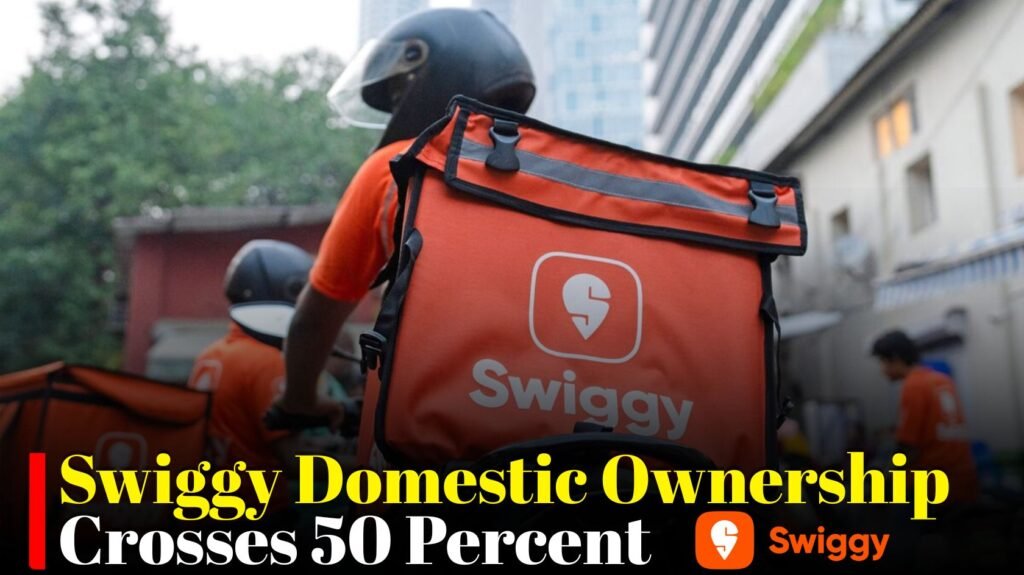
Swiggy Domestic Ownership Crosses 50 Percent mark in domestic ownership has emerged as a crucial indication for India’s fast-growing consumer internet sector. This move illustrates the muscle India’s investors are flexing in the country’s digital growth story for a business that made its name in food delivery and then expanded into rapid commerce. It also comes as Swiggy is gearing up for its next big market move, making the ownership transition all the more eagerly monitored by investors, analysts and startup watchers.
 Eternal Shares Climb Higher as MSCI Weight Restoration Expectations Support Fresh Market Gains
The Indian ownership base of Swiggy now appears more robust than previously, lending the company a more homegrown investor profile. This is important as domestic ownership is frequently a sign of confidence from Indian institutions, family offices, retail investors and long-term market players. This change in shareholding pattern could aid in improving market confidence and enable a more India centric growth story as the firm moves to its next phase.
 Dixon Technologies Shares Move Higher After Vivo India Joint Venture Receives Government Approval
Swiggy’s Indian Ownership Powerhouse Boosts Market Position
The Swiggy ownership change mirrors a bigger movement in India’s entrepreneurial sector. Many huge online firms used to rely substantially on foreign finance to grow quickly. That pattern is now shifting as Indian investors get active in late-stage startups and listed technology companies. Swiggy strengthens its roots in the Indian market by crossing the 50 percent level of domestic ownership, which is home to its core customers, delivery partners, restaurant partners and quick commerce users.

This can also help the brand be seen as a more locally supported firm. In a competitive space where impression matters, a bigger stake of Indian ownership may help Swiggy’s positioning ahead of any big IPO, funding or strategic expansion strategy.

The Significance of Domestic Ownership in a Major Market Move
Domestic ownership can be an important factor when a company is preparing for a larger step on the capital market. Revenue figures are typically ignored by investors. They also consider the quality of ownership, governance, stability of the business and long term confidence. The larger domestic share may suggest Indian investors perceive value in Swiggy’s business model even as the company works in a tough sector with intense competition and tight margins.
Timing is essential for Swiggy. The company is involved in meal delivery, grocery delivery and rapid commerce, all becoming key components of urban consumer behaviour. A stronger domestic ownership will make its market story more accessible to Indian investors who understand local consumption patterns better.
More Than Just Food Delivery, Swiggy’s Growth Story
Swiggy is no longer merely regarded as a food delivery platform. Its fast commerce operation has become a core pillar in its future growth plans. Now, consumers use such platforms for groceries, household requirements, snacks, personal care goods and everyday staples. This expanded use case gives Swiggy more headroom, but also more pressure to control shipping cost, dark store operations, discounts and customer loyalty.
The company’s next market move will likely be measured on the scale of balancing growth with financial discipline. Investors will be looking for convincing indicators that Swiggy can grow without having to invest aggressively. Ownership confidence is crucial in this story, but it is part of a bigger story.
Competition remains a big challenge
Swiggy operates in a difficult market. Food delivery and rapid commerce companies are facing stiff competition and customer expectations are growing fast. Fast delivery, increased product availability, fair pricing and reliable service are now minimum criteria. If any of these are weak it can affect user loyalty.
But Swiggy has a high brand recall, a huge delivery network and years of experience in Indian cities. If the corporation can becoming more efficient and keep consumers and partners happy, it could strengthen its hand before it makes its next big move in the market.
Closing Thought
Swiggy’s domestic ownership of more over 50 per cent is more than a shareholding update. It is a reflection of increased confidence of Indian investors in local digital platforms. The move gives Swiggy a stronger local brand and a more mature market story as the business braces for its next big market move. Now, it will be about execution, profitability and how well Swiggy can translate scale into long-term value.
