
Richard Gadd opens up about the shocking Half Man finale ending

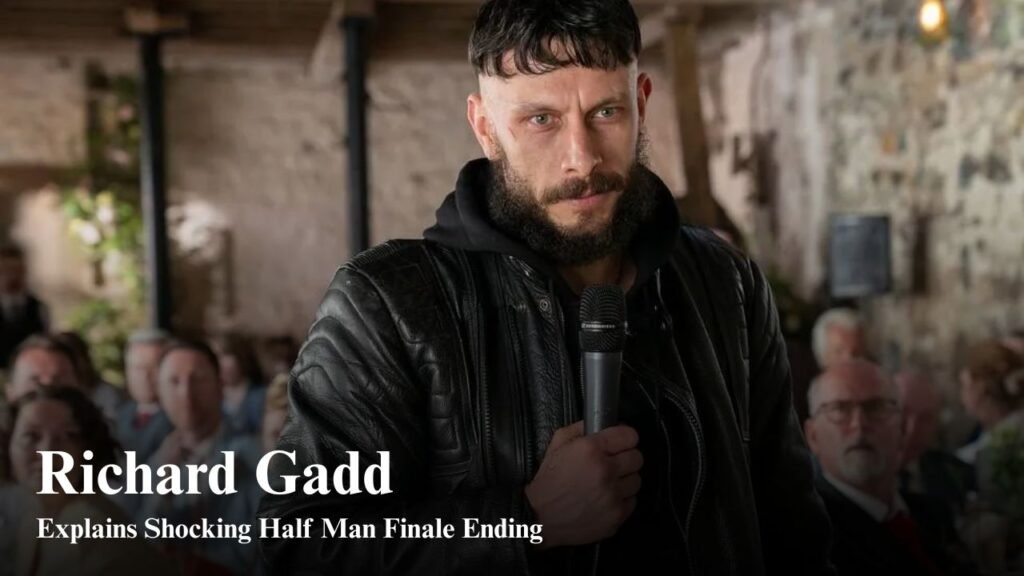
Richard Gadd: Once again, Richard Gadd has left audiences hanging in the middle of a story that feels intensely personal, emotionally uncomfortable and impossible to ignore. With Half Man, the actor-writer has created the kind of series that doesn’t stop when the screen goes black. Rather it lingers in the viewer’s mind, asking hard questions about truth, guilt, memory, family and the odd ways humans try to survive pain. The ending of the finale has become one of the most talked-about moments of the show, largely because it doesn’t provide a clear answer and instead chooses emotional truth over simple comfort. The final scenes shocked many fans, not because they were loud or dramatic, but because they were quiet, raw and painfully human. Richard Gadd opening up about that ending has only made the conversation stronger, as viewers attempt to understand what the finale really means, and why it was built in such a tense, layered way.

Why did the ending of Half Man feel so personal?
Half Man’s ending feels intimate because Richard Gadd’s storytelling often skirts emotional reality. His writing does not employ trauma as a plot device. It considers it to be something that influences small decisions, daily routines and the ways people communicate with each other. In the last episode, the tension comes not only from what happens, but what has been building underneath the surface for the entire series. Every pause, every look, every incomplete sentence has a meaning.
 Avengers Doomsday Trailer Draws Criticism Over VFX as Indian Viewers Compare It With Ramayana
What Final Twist Tells Us About Richard Gadd’s Remarks
Richard Gadd’s reaction to the finale discussion seems to imply that the ending was never meant to be a cheap surprise. It was designed to change how the viewers look back at the whole story. The final twist works because it doesn’t come out of nowhere. It grows quietly out of the details already there. That sort of ending requires the audience to go back and re-evaluate previous scenes, not because the story deceived them but because the characters themselves were in denial of harsh realities.
 Maria Goretti Says She Missed Financial Independence After Leaving Her Career to Focus on Motherhood
Many shows end with a twist to surprise the viewer for a couple of seconds. Half Man’s twist feels more emotional than mechanical. It alters the meaning of some relationships, and it shows the extent to which unresolved pain can shape identity. Richard Gadd’s storytelling often gets that people don’t always lie because they’re evil. Sometimes they lie because they’re scared, ashamed or can’t handle the whole story of what happened.
 Santy Sharma YouTube Channel Suspension Row Grows After CJP Remarks Spark Fresh Online Debate
- The ending is emotional but not over-dramatic so it seems shocking.
- The twist forces you to reassess earlier scenes and hidden motives.
- The end isn’t just closure, but more a realistic emotional ending.
- Richard Gadd’s style is intimate and raw and uncomfortable.
Half Man Finale Meaning Explained With Its Most Discussed Moments
The middle section of the finale is where the emotional pressure becomes almost impossible to ignore The characters start saying things they have avoided for too long, but even then the truth does not come in a clean form. It arrives in pieces. This makes the episode seem more realistic. People do not often confess pain well. They circle around it, deny it, joke about it or throw anger over it before they finally admit what’s really inside.
The most talked-about moments of the finale seem to work because they are tied together with one clear theme: the difference between surviving and truly living. Characters cope with emotional damage in various ways throughout Half Man. Some hide behind the control. Some hide in silence. Some convert pain to anger. The finale directly pits those methods of survival against each other. It asks if you can really move forward without naming what broke you.
Why Fans Are Still Discussing Richard Gadd’s Creative Decision
Fans are still arguing about the ending because Half Man doesn’t tell them exactly how to feel That’s a bold creative choice, especially in a time when many shows explain every detail to avoid confusion. Richard Gadd is less interested in easy satisfaction than emotional truth. He relies on the viewers to be uncomfortable and to come to their own conclusions.
Half Man: How to Shock Without Losing the Human Touch
The finale ending is shocking, but it doesn’t feel hollow. That’s significant.” Shock is the easy way out for many shows. They kill a character, drop a secret, or break up a relationship just to make noise. Half Man uses shock in a more restrained manner. The ending hurts, because it seems connected to everything that preceded it. It’s not a random blast. It is the result of pressure that has been building silently from the start.
Richard Gadd’s writing is at its best when he locates the discomfort in everyday human behaviour. A noisy quarrel may feel less threatening than a conversation across the room. Sometimes the refusal to answer tells you more than a confession. The finale gets it that emotional damage is often in the small gestures. That’s why the ending hits with such force
The Half Man Ending: Is It A Tragedy Or Hope?
The biggest question after the finale is whether the ending is tragic or hopeful. The answer could be both. It’s tragic because the characters can’t fully escape what made them. The past is still here. Words are spoken, but they don’t magically fix things. The emotional damage is real, and the finale doesn’t pretend otherwise.
That’s what gives the ending a grown up feel. It does not mistake happiness for healing. It doesn’t mean one conversation can erase years of silence. It shows that emotional honesty can hurt, and that it can be necessary, at the same time.
