
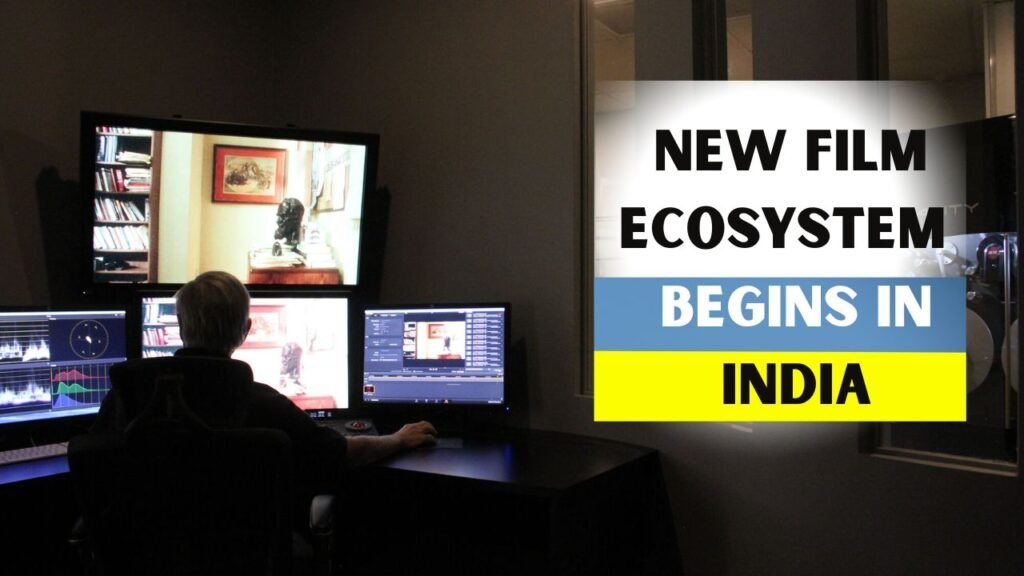
Prasad Corp and Monsoon Colour Lab Partner to Build India’s End-to-End Film Production Ecosystem


Why is this partnership important for Indian filmmakers?
This is a significant partnership as filmmakers are returning to analogue storytelling for its texture, depth and emotional quality. Filming was more expensive and complex work processes and fragmented services in the past. Monsoon Colour Lab partners with Prasad Corp to give creators a more efficient local production pipeline
 Cocktail 2 Box Office Collection Reaches Rs 84 Crore After Strong Third Week Performance in Theaters
- Filmmakers shooting in 35mm, 16mm and Super8 formats
- It makes us less dependent on foreign labs and a mixture of services.
- It links film processing with digital post-production.
- It makes independent and commercial filmmakers more efficient.
How will it develop a full film ecosystem?
An end-to-end film ecosystem means creators can take camera negative to final delivery on screen in one connected workflow. This is the process of making the film, doing a high quality scan, restoring damaged material if needed, colour grading and generating the final output for cinemas, streaming platforms or archives.

- Film processing will be part of a planned production chain.
- 4K scanning will help to keep the image quality native.
- Colour grading gives filmmakers more creative control.
- Post production services will address the needs of a final delivery.
- Restoration support will help preserve old and new film material.
Why is analogue film relevant again?
Analogue filmmaking is back in the mainstream and many directors, cinematographers and artists like the organic look of film. Its grain, contrast and colour response give it a visual character that is hard to mimic with digital cameras. This renewed interest has made a strong film infrastructure more important than ever before.
 Ranveer Singh and Arjun Kapoor Celebrate Anshula Kapoor’s Wedding Reception With Energetic Dance
The Benefits of Native 4K Scanning in Film Production
A big part of this partnership is native 4K scanning which means that we can convert physical film into high-resolution digital files and there’s no visual loss. This enables filmmakers to keep the original richness of the negative during the editing, colour grading, restoration and final digital distribution.
- It retains fine detail from the original film negative.
- Provides a good post production workflow and editing work flow.
- It helps to preserve the natural grain and texture of the film.
- It makes filmic content for digital platforms of today.
Why are 35mm, 16mm and Super8 important?
Every film format has a creative function. 35mm is most often associated with high quality cinema, 16mm is often used for independent and documentary style narratives and super8 provides a nostalgic, experimental and personal visual style for makers. All 3 formats available you have more creative freedom.
Why is this collaboration good for film preservation?
Film preservation is not only about saving old movies, but saving work created on film today for the future. Prasad Corp has expertise in restoration and media technology to help filmmakers and archives preserve valuable content through careful scanning, digital restoration and long-term asset management.
- Old and new film can be scanned for digital safety.
- Restoration fixes old or damaged visuals.
- Archives can preserve culturally important film assets.
- Filmmakers can safeguard their original works for distribution in the future.
Will this make filmmaking more accessible in India?
Yes – this partnership can help to democratise film production through creating a network of local service providers for analogue filmmakers. With all the processing, scanning, grading and finishing that can be done in India, creators can save time, reduce logistical headaches and plan film-based projects with greater confidence and control.
What does this mean for South Asian storytellers?
This partnership offers South Asian storytellers a stronger platform to make films that have a classic and analogue feel, but with the help of modern post-production tools. This can help feature filmmakers, short film makers, music video directors, advertising teams, artists and students who want film aesthetics and don’t want to sacrifice technical reliability.
- Better Technical Support to Regional Film Makers.
- Young creators can play with real film formats .
- Production teams have more they can do in India.
- South Asian cinema has room to raise its production standards worldwide.
Will this pact raise India’s stature in global cinema?
India already has one of the most prolific film industries in the world but a strong analogue infrastructure can only add to its advantage. The country can attract creators seeking world-class production support, cost-effective workflows and technically sound post-production in the region, with film-to-digital services offered locally.
What does this mean for the future of film-making?
The future of film making in India could be more hybrid with creators shooting on physical film and finishing the project with advanced digital workflows. Analogue and digital are not opposing approaches; the partnership proves this. Instead, they can work together to provide more immersive cinematic experiences.
