
Backrooms Becomes A24’s Biggest Horror Movie Opening

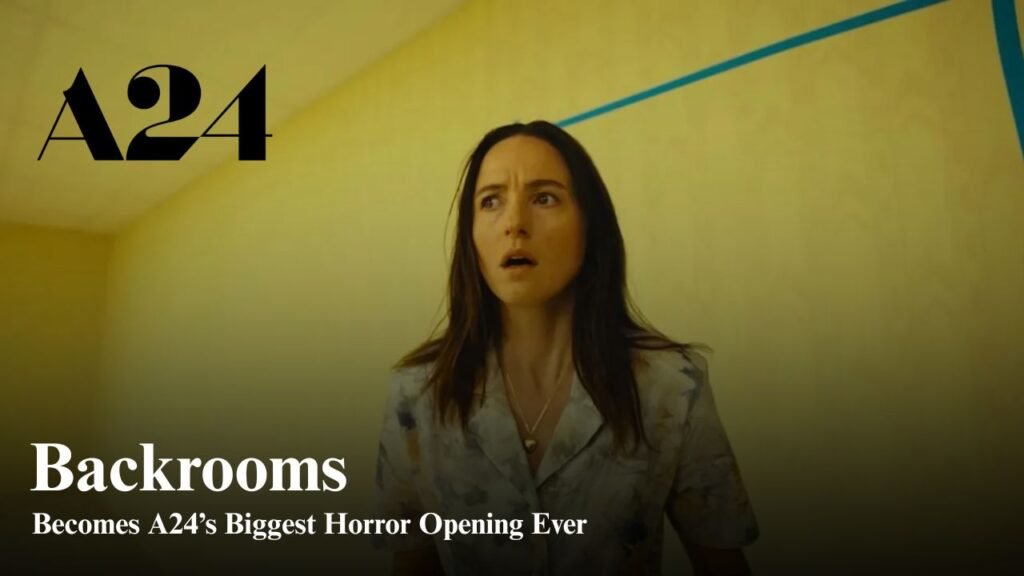
Backrooms: has now moved from internet legend to box office headline, giving A24 a horror launch that feels inevitable. The film arrived with fans already trained by liminal spaces, yellow walls, buzzing lights, and the fear of being trapped somewhere that should not exist. Yet the opening points to more than curiosity. Audiences came for a haunted-house experience built on silence, emptiness, and digital folklore. For A24, a studio known for shifting horror expectations, this opening creates another cultural moment. It proves that atmosphere, mystery, and smart marketing can compete without franchise noise.

Why Did Backrooms Become A24’s Biggest Horror Opening So Fast?
The success of Backrooms begins with recognition. Many viewers knew the concept before they knew the movie existed. The image of endless office-like rooms has circulated for years, creating a shared nightmare. A24 did not need to explain the fear from the ground up; it only had to turn that fear into a story worth paying for. That gave the movie an advantage. Instead of selling a monster, the campaign sold the dread of being lost in a place that looks ordinary and impossible to escape.
 Avengers Doomsday Trailer Draws Criticism Over VFX as Indian Viewers Compare It With Ramayana
What makes the opening more impressive is that Backrooms does not fit the usual horror-event model. It is not driven by a masked killer, a demon, or a sequel hook. Its sits in mood, sound, and uncertainty. That is where A24 has often found power. With Backrooms, that identity meets a generation raised on YouTube lore.
 Maria Goretti Says She Missed Financial Independence After Leaving Her Career to Focus on Motherhood
The film also benefited from conversation. People wanted to see whether a viral concept could survive as a feature-length movie. That curiosity became part of the event, because the question was whether the internet’s strangest nightmare could become a real theatrical force.
 Santy Sharma YouTube Channel Suspension Row Grows After CJP Remarks Spark Fresh Online Debate
How A24 Turned Online Fear Into A Theater Event
A24’s smartest move was treating Backrooms as more than an adaptation. The studio leaned into mystery instead of overexplaining the world. Horror fans lose interest when an idea is flattened by rules. Here, the unknown remains the selling point. Trailers, posters, and discussion kept attention on scale, isolation, and the possibility that the characters had entered a place outside reality.
That approach helped the film feel premium rather than disposable. Internet horror can look cheap when copied too directly, but Backrooms works because familiar details are presented with patience. The endless rooms become oppressive. The hum of lights becomes a threat. Empty hallways feel like they are watching. In theaters, those elements surround viewers with the unease that made the concept popular.
What The Opening Says About Modern Horror Fans
Modern horror audiences are no longer waiting for studios to tell them what matters. They discover myths and create demand before Hollywood arrives. Backrooms is a clear example of that shift. Its opening shows that online culture can feed theatrical horror when the source idea has a strong visual identity.
- Familiar fear: Viewers already understood the basic nightmare before buying a ticket.
- Curiosity factor: Many wanted to see whether the concept could work beyond short videos.
- Studio trust: A24’s name gave the project an artistic horror
- Social sharing: The movie encouraged debate, reactions, and theory posts after screenings.
This matters because horror depends on word of mouth. A strong opening is useful, but a movie becomes bigger when audiences leave wanting to describe what they felt. Backrooms gives them exactly that: fear easy to explain, yet hard to capture.
Can Backrooms Change The Future Of Horror Adaptations?
The bigger question is what happens after this opening. Studios will notice the numbers, but copying Backrooms will not be easy. Its success comes from mood, not online popularity. The film works because the concept is simple enough to understand instantly and strange enough to expand without losing identity.
Still, the result may encourage more filmmakers to look at digital folklore with respect. For years, internet-born horror was treated as a niche playground. Backrooms shows that these stories can carry mainstream weight when handled carefully. The audience is there, but it expects craft. A familiar title may bring people in, yet execution decides whether they recommend it afterward.
Why The Box Office Win Feels Bigger Than One Movie
For A24, this is not only a financial win; it is a brand statement. The studio has repeatedly shown that horror does not need one formula. Backrooms extends that reputation by proving that a concept born from online images can become a major cinema event. It arrives when studios are searching for fresh properties that feel familiar without being exhausted.
The win also reflects a wider hunger for horror that feels uncomfortable in new ways. Audiences have seen haunted houses, dolls, possessions, and slashers. Backrooms offers another fear: the terror of being misplaced by reality itself.
What Comes Next After Backrooms’ Record Horror Start?
After such a strong opening, the focus shifts to staying power. Horror films can burn bright and fade quickly, especially when curiosity drives the first weekend. Backrooms will need audience discussion, repeat viewings, and continued social interest to turn its debut into a long run. Its world invites speculation, giving the movie life beyond the screen.
Whether it becomes a franchise, Backrooms has made its point. A24 turned digital unease into theatrical excitement. The opening proves that horror’s next movement may not come from old monsters or familiar sequels. It may come from strange corners of the internet, where one image can become a shared fear, and that fear can eventually fill theaters.
