
Strongest El Niño Since 1950 Could Impact India’s Monsoon and Weather Patterns This Year

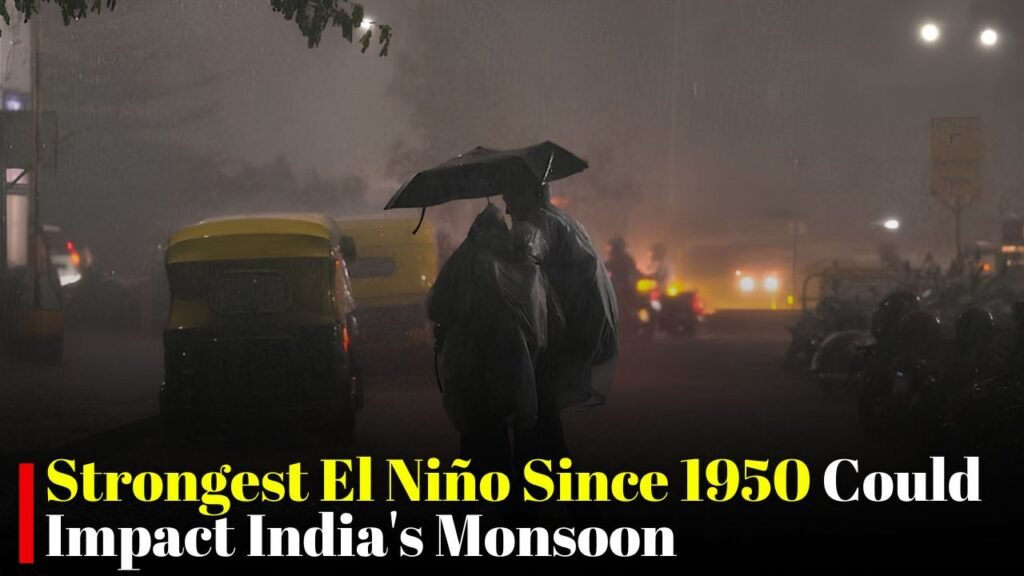
Strongest El Niño Since 1950: India’s weather may face a difficult test this year as a powerful El Niño phenomenon raises concerns over the monsoon, temperatures, rainfall distribution and crop conditions. El Niño is a climate pattern that happens when the eastern and central Pacific Ocean gets unusually warm. It may start a long way from India, but its impacts can spread in the sky and disrupt typical weather patterns. Even a minor change in the monsoon’s behaviour could have major repercussions for a country where millions depend on periodic rains for agriculture, water supplies and daily living.
 Delhi Weather Update IMD Says Cloudy Skies Will Continue While Rain Remains Unlikely This Week
Now monsoon rainfall outlook is the focus for weather scientists, farmers, policymakers and markets. A strong El Nino does not usually translate into a failing monsoon but it does enhance the chances of below-normal rainfall, protracted dry spells and patchy rainfall in different parts of the country. There have been instances of El Nino dampening monsoon activity for India, especially in the important June to September period. That’s why forecasters are looking closely at sea surface temperatures, wind patterns and Indian Ocean conditions before generating their seasonal forecasts.
The El Niño-Indian Monsoon Connection
The regular circulation that feeds India’s south-west monsoon can be disrupted by El Niño. In a normal monsoon season, moist air from the Indian Ocean blows towards the mainland and causes heavy rains across a large area. But if the Pacific Ocean is particularly warm, global wind patterns might change. It could weaken the monsoon currents and could delay or interrupt the rains.
 Ghaziabad Schools Remain Closed Today After IMD Issues Heavy Rain Alert Across the District
The link is, however, not easy. Sometimes El Nino years have meant poor rains, sometimes not much damage. Several other elements influence the final outcome, such as the Indian Ocean Dipole, local sea temperatures, snow cover and low pressure systems over the Bay of Bengal.
 Hyderabad Rain Today Prompts IMD Warning as Telangana Braces for More Showers and Strong Winds
Effect on Agriculture and Food Prices
A weak monsoon can impact kharif crops such as rice, legumes, cotton, soybean and maize. Farmers need rain to come at the right moment, both for planting and for the growth of crops. In rain-fed locations, sowing may be delayed if the rains are delayed or unequal. Less rain can also mean lower reservoir levels, which can influence irrigation and the provision of drinking water.
Crop output if impacted might potentially lead to upward pressure on food costs. Weather shocks are particularly harmful to vegetables, legumes and cereals. Even where rainfall is regular, improper distribution can be damaging to farming. Some areas may be heavily rained while others are dry.
Risk of heat waves and extreme weather
Higher global temperatures are typically associated with El Niño years. For India, this could mean an increased risk of extreme heatwaves before and during the monsoon season. Hotter days can drive up electricity use, exacerbate water stress and impact outdoor workers, children, seniors and low-income populations more acutely.
Weak monsoon does not indicate that there will not be extreme rain at the same time. India is still at threat of sudden heavy showers, floods, cloudbursts and small storms. Climate change has made the weather more volatile, so a season can have both drought-like conditions and significant rain events.
Authorities That Might Be Watching Closely
Temperatures in the Pacific Ocean, monsoon beginning dates, the spread of rainfall, reservoir storage and the progress of crop planting are expected to be monitored by weather services. Early warnings can help States be better prepared for heatwaves, water shortages and farm stress.
Citizens need to be prepared, not panicked. Improved water management, early warnings, crop scheduling and heat safety practices may lessen danger. India’s monsoon is complicated and El Niño is just one piece of the bigger meteorological puzzle. But if the event stays strong, its effects on rainfall and temperatures might be one of the biggest climate stories of the year.
Sources
- IMD – Tracks India’s monsoon forecast, rainfall distribution, heatwave alerts and seasonal weather updates.
- WMO – Tracks global El Niño conditions and explains their global climatic effects.
- NOAA – Updates on the rising Pacific Ocean, ENSO status, and the strength of past El Niño events.
- Skymet Weather – Monsoon forecast, rainfall threats & regional weather forecast for India.
- Down To Earth – Stories on climate change, agriculture, water crisis and societal impacts of El Nino in India.
