
Apple M7 Chips Could Replace High-End M6 Macs as Company Shifts Focus to AI Performance

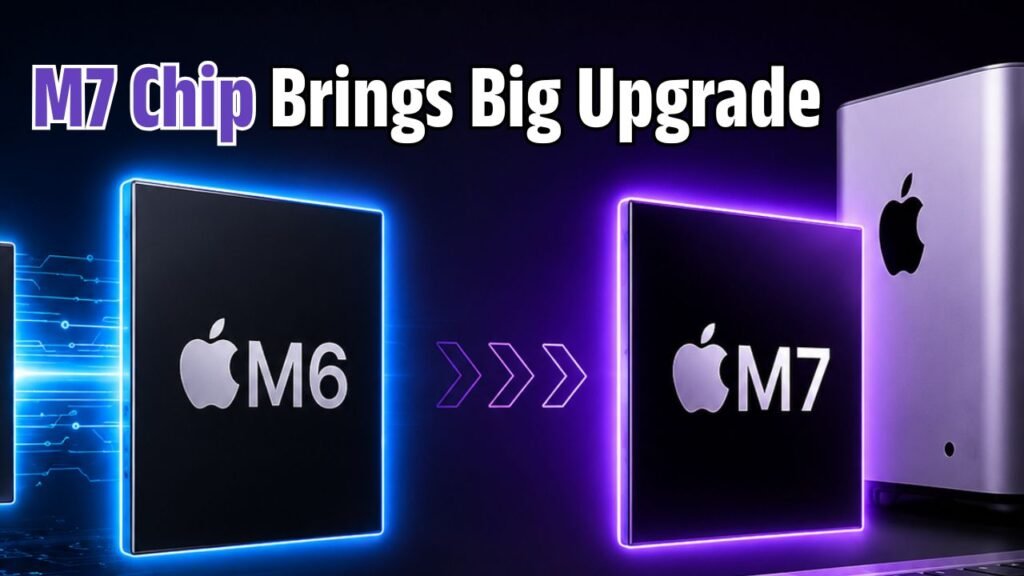

Will Apple Skip M6 High-End Macs?
Apple might use the regular M6 in some basic or mass-market Macs, but the biggest change might be up at the high end. Apple may not release M6 Pro and M6 Max versions but instead move its high-end Mac line to M7 chips, which would have better AI processing, improved efficiency and more long-term performance potential.
 Google Pixel 11 Pro Fold Leaks Reveal India Price, Launch Timeline, and Major Specs Ahead of Debut
- Regular users can still buy regular M6 Macs.
- Pass on high-end M6 Pro and Max versions.
Why Is Apple Spending More on AI Performance?
AI features are becoming the heart of modern computers — especially for creative work, productivity, coding, image editing and local language models. Apple wants to do more work on the device itself, rather than rely entirely on cloud servers. That means faster neural engines, more memory bandwidth, and chips built for AI workloads.

How Might M7 Chips Improve Future Macs?
The M7 chips could mean more powerful neural processing, faster graphics and better power efficiency. For Mac users, that could mean slicker AI photo editing, faster video workflows, smarter app automation, and longer battery life. It can also enable professionals to do faster machine learning tasks without needing to use external cloud-based tools.

- Improved on-device AI processing for Apple Intelligence features.
- Better performance for creators and developers
- Better use of batteries when workload is high.
- Speedier local AI models and creative app handling.
- Improved multitasking for professional Mac users.
Who will benefit most from MacBook Pro users?
If Apple skips right to M7 Pro and M7 Max chips for MacBook Pro users, it could have the biggest winners. Mostly they are used for video editing, software development, 3D designing, music production and business work. A more AI-focused chip could make the next MacBook Pro feel like a bigger upgrade than a typical annual refresh.
What’s Going on With the M6 Mac Lineup?
The M6 chip may not completely die out. Apple could still use it in lower-end MacBook Pro, MacBook Air, iMac or Mac mini models. But if the high-end versions are skipped, the M6 generation might be a shorter transition phase before Apple brings more powerful M7-based machines for premium users.
- M6 could stick around for base Mac models
- Premium Macs could go straight to M7.
- The M6 cycle could be shorter than expected.
- Buyers may wait for clarity on M7 launch.
Could This Alter Apple’s Upgrade Strategy?
Yes, this move could alter user thinking around upgrades. Buyers might start to compare AI performance, neural engine power and memory efficiency rather than picking a Mac based purely on CPU and GPU performance. And Apple could sell future Macs based on smart workflows, not just faster, longer-lasting, better displays.
Thinking of waiting for the M7 Macs?
People who need a Mac right now shouldn’t put off important work based on rumours. Today’s Apple Silicon Macs are both powerful and reliable. If you have AI-heavy workflows, though, you’ll want to keep a close eye on the M7 timeline, especially if you’re planning to buy a high-end MacBook Pro or Mac Studio.
- If your current device is limiting your work, buy now.
- If AI performance is the #1 priority, then wait.
- Don’t upgrade for a minor bump in the road.
- First, check out official Apple announcements.
Is Apple Getting Its Macs Ready for an AI-First Future?
Apple’s potential M7 pivot highlights the growing significance of artificial intelligence for personal computers. Future Macs might be judged not just on their raw performance, but also on how well they do smart, local, private and efficient AI tasks. Replacing the high-end M6 Macs with the M7 could usher in a new era of AI-first computing for Apple.
Is the M7 Apple’s Next Big Mac Jump?
If Apple skips the high-end M6 chips and goes straight to M7 Pro and M7 Max models, it will be a clear sign that there is a change in the development of Macs. Perhaps the company is gearing up its premium computers for heavier AI workloads, faster local intelligence, and more advanced professional workflows. For users, the M7 generation may be one of the most important Mac upgrades in years.
